


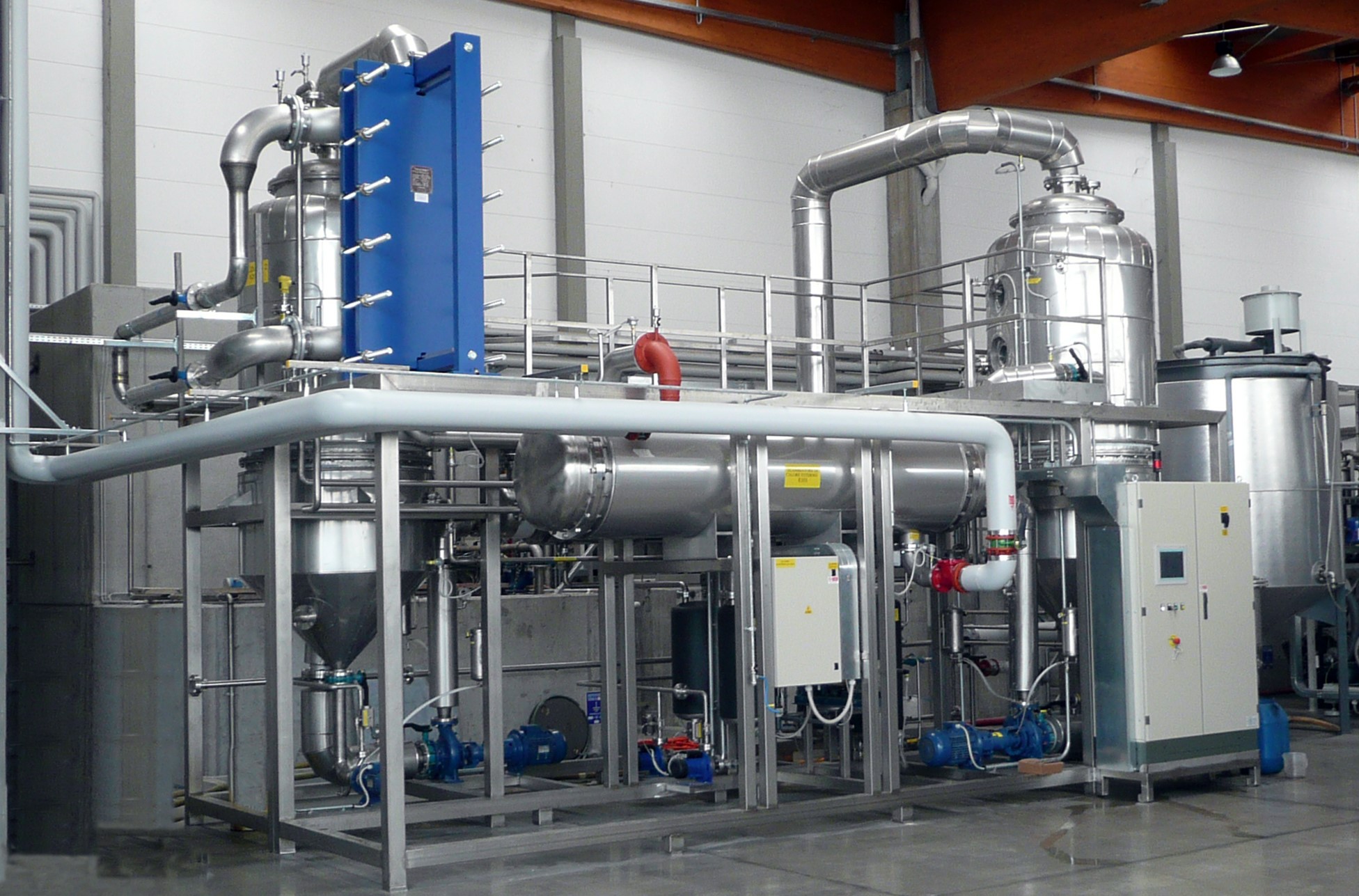
- Thermal and electrical evaporators
- Up to 99% of water recovered
- Zero Liquid Discharge solution
OUR RANGE OF WASTEWATER EVAPORATORS
At Condorchem Enviro Solutions, we design and manufacture wastewater evaporators. Our vacuum evaporation systems deliver excellent performance in:
• Minimizing the final sludge to be managed and cuting disposal cost
• Enabling water reuse and reduce freshwater intake
• Recovering valuable raw materials and by-products dissolved in the water
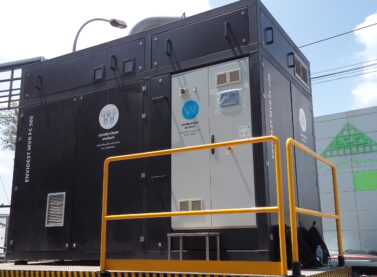 Vacuum evaporation with electrical energy (MVR)
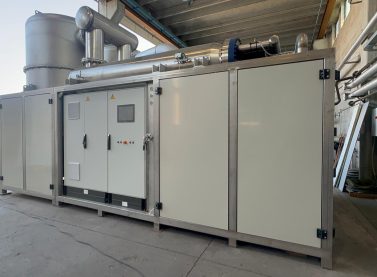 Vacuum evaporation with electrical energy (HP)
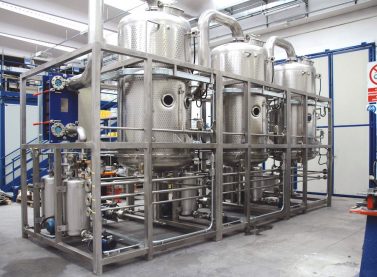 Multiple effect thermal evaporators
CUSTOMIZED DESIGN
All our wastewater evaporators are customized to ensure optimal performance in the treatment of complex, variable, and high-risk wastewater streams, providing an efficient and reliable solution for even the most demanding industrial challenges.
CAPACITY RATES
Our wastewater evaporators can manage from 250 liters per day up to 250 m3 per day.
WASTEWATER COMPOSITION
Effective in the removal of brines, oils, PFAs, surfactants, metals and more.
AVAILABLE ENERGY
Our evaporators can operate with electrical and thermal energy to optimize OPEX and performance.
CONSTRUCTION MATERIALS
Available in stainless steel and corrosive resistant materials, such as super duplex.
OUR WASTEWATER EVAPORATORS MODELS
ELECTRICAL HEAT PUMP VACUUM EVAPORATORS
| ENVIDEST LT VS | ENVIDEST LT FC-2 | DESALT LT VR | DESALT LT DRY | |
|---|---|---|---|---|
| Technology | Heat pump (Freon R-513A) | Heat pump (Freon R-513A) | Heat pump (Freon R-513A) | Heat pump (Freon R-513A) |
| Capacity (l/day) | 250 to 1800 | 6720 to 52800 | 250 to 3500 | 250 to 1000 |
| Electricity consumption per 1 m³ of distillate produced | 170 kWh/m³ | 110 kWh/m³ | 220 kWh/m³ | 270 kWh/m³ |
| Thermal energy for evaporation | NA | NA | NA | NA |
| Thermal energy for condensation | NA | NA | NA | NA |
| Vacuum | ≈ 60 mbar | ≈ 125/70 mbar | ≈ 60 mbar | ≈ 60 mbar |
| Evaporation temperature | ≈ 35 °C | ≈ 50/40 | ≈ 35 °C | ≈ 35 °C |
| Access Datasheet | Access Datasheet | Access Datasheet | Access Datasheet |
ELECTRICAL MECHANICAL VAPOR RECOMPRESSION (MVR) EVAPORATORS
| ENVIDEST MVR FF | ENVIDEST MVR FC TF | DESALT MVR FC | |
|---|---|---|---|
| Technology | Mechanical Vapor Recompression (MVR) / Falling Film (FF) / Forced Circulation (FC) | Mechanical Vapor Recompression (MVR) / Forced Circulation (FC) | Mechanical Vapor Recompression (MVR) / Forced Circulation (FC) |
| Capacity (l/day) | 100 to 1800 | 1000 to 4000 | 600 to 2500 |
| Electricity consumption per 1 m³ of distillate produced | 35-60 kWh/m³ | 35 kWh/m³ | 64 kWh/m³ |
| Thermal energy for evaporation | NA | NA | Small amount of saturated steam |
| Thermal energy for condensation | NA | NA | NA |
| Vacuum | ≈ 700 mbar | ≈ 750 mbar | ≈ 700 mbar |
| Evaporation temperature | ≈ 90 °C | ≈ 90-94 mbar | ≈ 90 °C |
| Access Datasheet | Access Datasheet | Access Datasheet |
THERMAL EVAPORATORS
| ENVIDEST DPM-1-2-3 | ENVIDEST MFE-1-2-3 | DESALT MFE-1 | |
|---|---|---|---|
| Technology | Evaporation with thermal energy | Evaporation with thermal energy Forced Circulation (FC) |
Evaporation with thermal energy Forced Circulation (FC) |
| Capacity (l/day) | 4000 to 30000 | 20000 to 200000 | 20000 to 100000 |
| Electricity consumption per 1 m³ of distillate produced | NA | NA | NA |
| Thermal energy for evaporation | Saturated steam or hot water | Saturated steam or hot water | Saturated steam or hot water |
| Thermal energy for condensation | Cooling water | Cooling water | Cooling water |
| Vacuum | ≈ 310/200/125 mbar | ≈ 310/200/125 mbar | ≈ 200 mbar |
| Evaporation temperature | ≈ 70/60/50 °C | ≈ 70/60/50 °C | ≈ 60 °C |
| Access Datasheet | Access Datasheet | Access Datasheet |
| DESALT VR | DESALT DRY | DESALT VTR | |
|---|---|---|---|
| Technology | Evaporation with thermal energy | Evaporation with thermal energy | Evaporation with thermal energy |
| Capacity (l/day) | 2000 to 20000 | 500 to 3000 | 10000 |
| Electricity consumption per 1 m³ of distillate produced | NA | NA | NA |
| Thermal energy for evaporation | Saturated steam or hot water | Saturated steam or hot water | Saturated steam |
| Thermal energy for condensation | Cooling water | Cooling water | Cooling water |
| Vacuum | ≈ 200 mbar | ≈ 200 mbar | NA |
| Evaporation temperature | ≈ 60 °C | ≈ 60 °C | ≈ 100 °C (Patm) |
| Access Datasheet | Access Datasheet | Access Datasheet |
ZERO LIQUID DISCHARGE SOLUTION
Wastewater evaporators are a key technology in achieving Zero Liquid Discharge (ZLD) because they concentrate and separate contaminants
from water through thermal processes, leaving only clean distillate and solid residues. By separating liquid effluent, they enable complete water
recovery and ensure full environmental compliance, making them essential for sustainable industrial wastewater management.