


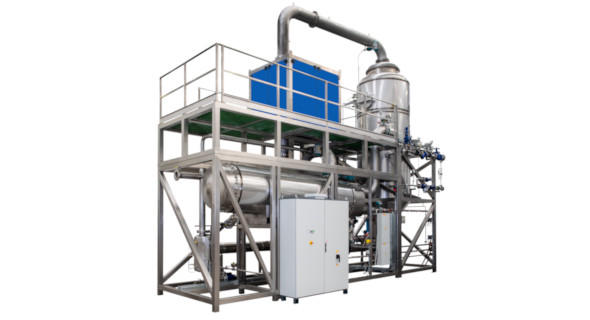
- Fully electrical operated evaporators
- Highly energy-efficient
- Lowest operating costs
AVAILABLE MVR MODELS AND MAIN TECHNICAL CHARACTERISTICS
Our mechanical vapor recompression evaporators are tailor-built to meet each customer’s specific requirements and operational goals.
MVR systems use a compressor to increase the pressure and temperature of the vapour generated in the system, reusing it as an energy source for the evaporation process, which translates into major OPEX reduction for continuous, high-volume applications.
We manufacture three different models:
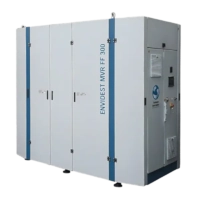
Technology: Mechanical Vapor Recompression (MVR) / Falling Film (FF) / Forced Circulation (FC)
Capacity (l/h): 120 to 1980
Electricity consumption per 1 m³ of distillate produced: 35 to 60 kWh/m³
Vacuum: ≈ 700 mbar
Evaporation temperature: ≈ 90 °C
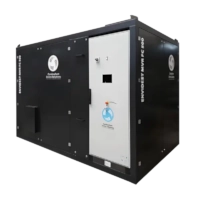
Technology: Mechanical Vapor Recompression (MVR) / Forced Circulation (FC)
Capacity (l/h): 1042 to 4166
Electricity consumption per 1 m³ of distillate produced: 35 kWh/m³
Vacuum: ≈ 750 mbar
Evaporation temperature: ≈ 90-94 °C
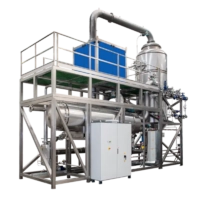
Technology: Mechanical Vapor Recompression (MVR) / Forced Circulation (FC)
Capacity (l/h): 600 to 2500
Electricity consumption per 1 m³ of distillate produced: 64 kWh/m³
Vacuum: ≈ 700 mbar
Evaporation temperature: ≈ 90 °C
KEY ADVANTAGES
All our MVR evaporation systems deliver exceptional operational advantatges:
- They reuse latent heat by mechanically recompressing the generated vapor, drastically reducing external heat demand. owest kWh per m³ among high-capacity evaporators.
- Operates with electrical power. No need for boilers or thermal oil systems. Simplified utilities, reduced infrastructure complexity and easier plant integration.
- Designed for stable, 24/7 operation. Ideal for large industrial plants with steady wastewater generation thanks to its high evaporation rates with consistent process conditions.
MAIN COMPONENTS
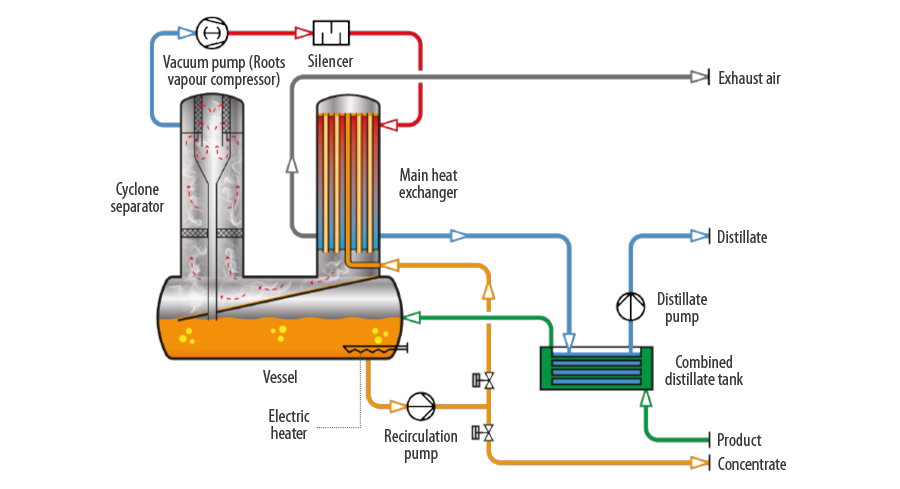
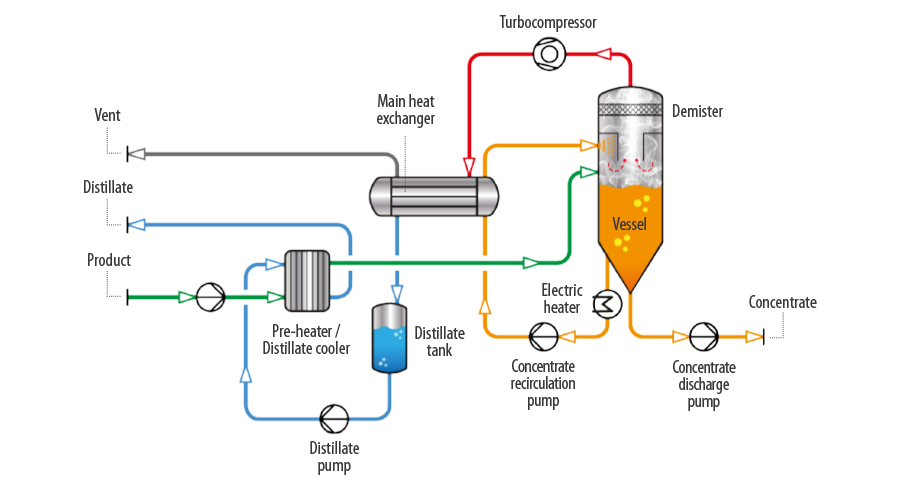
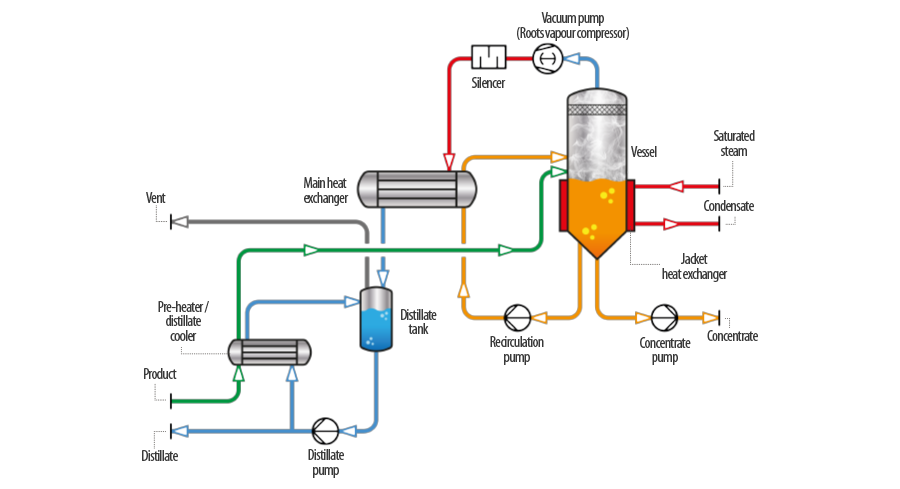
The following video showcases the DESALT MVR FC evaporator/crystallizer. The video highlights all the main components and benefits of mechanical vapor recompression systems.
OPERATION OF OUR MVR EVAPORATORS
Feed introduction and preheating
The wastewater or liquid stream enters the system and is preheated to reach the required evaporation conditions.
Flow rate, temperature, and vacuum conditions are stabilized before the main evaporation process begins.
Vacuum evaporation
The liquid enters the evaporator, where evaporation takes place under
vacuum conditions.
Two streams are generated: water vapor and concentrated liquid (which continues increasing in solids content)
Mechanical vapor recompression
The generated vapor is directed to a compressor, where pressure increases and temperature rises.
The recompressed vapor is then reused as the heating source for the evaporator itself.
Condensation, recovery and crystallization
The vapor releases its heat and condenses, producing reusable distilled water.
The concentrate reaches high solids content and, in systems such as DESALT MVR FC, controlled salt crystallization takes place.
Final outputs: recovered water and concentrate or solid crystals.
3D VIDEO ANIMATION
The following is a 3D video animation that shows step-by-step how our mechanival vapor recompression evaporators work, from the feed of the solution to be treated into the evaporator until the distillate and concentrate are extracted from the system.
MECHANICAL VAPOR RECOMPRESSION CONFIGURATIONS
MVR evaporators can be designed in different configurations to match the properties of the feed stream and the operating conditions of each process.
Our three types of design (forced circulation, natural circulation, and falling film) allow the system to be optimized for fouling tendency, solids content, viscosity, and thermal behavior, ensuring maximum efficiency and reliability in every application.