- They operate with electrical energy and reused steam within the system
- They are the models with the highest energy efficiency
- Significant reduction in operating costs (OPEX)
MODELS AND MAIN TECHNICAL FEATURES
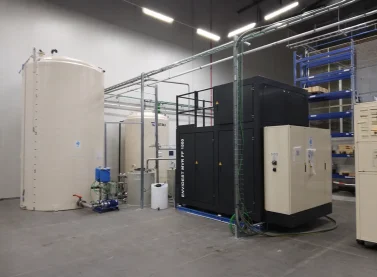
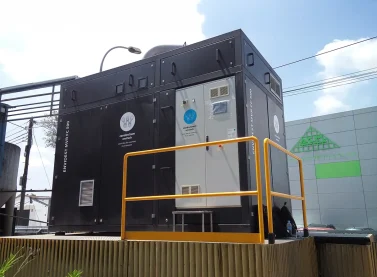
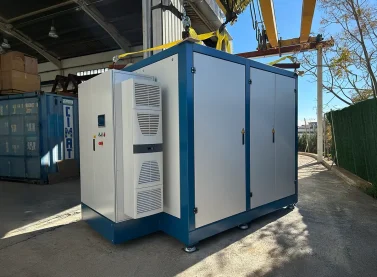
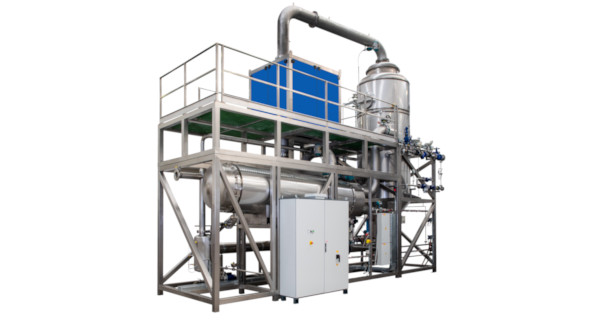
Our mechanical vapor recompression evaporators can be manufactured in different configurations: falling film, forced circulation, or natural circulation.
MVR evaporation systems include a Roots compressor to increase the pressure and temperature of the vapor generated in the system, reusing it as an energy source for the evaporation process, which translates into a significant reduction in OPEX for continuous, high-volume applications.
All our wastewater evaporators are manufactured with a high degree of customization to meet each customer’s objectives and operating conditions.
We manufacture three different MVR evaporator models:
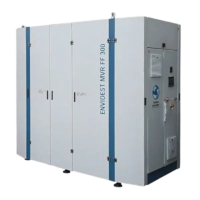
Technology: Mechanical Vapor Recompression (MVR) / Falling Film (FF) / Forced Circulation (FC)
Capacity (l/h): 120 to 1980
Electric consumption per 1 m³ of distillate produced: 35 to 60 kWh/m³
Vacuum: ≈ 700 mbar
Evaporation temperature: ≈ 90 °C
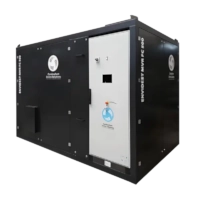
Technology: Mechanical Vapor Recompression (MVR) / Forced Circulation (FC)
Capacity (l/h): 1042 to 4166
Power consumption per 1 m³ of distillate produced: 35 kWh/m³
Vacuum: ≈ 750 mbar
Evaporation temperature: ≈ 90-94 °C
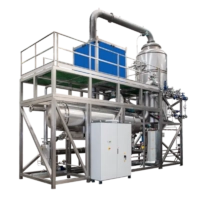
Technology: Mechanical Vapor Recompression (MVR) / Forced Circulation (FC)
Capacity (l/h): 600 to 2500
Power consumption per 1 m³ of distillate produced: 64 kWh/m³
Vacuum: ≈ 700 mbar
Evaporation temperature: ≈ 90 °C
MVR EVAPORATOR AND CRYSTALLIZER SELECTION
The following table sets out the main selection criteria to identify the mechanical vapor recompression evaporator best suited to your needs.
| Application or priority | Suggested model | Selection advantages | Published capacity | Electricity consumption |
|---|---|---|---|---|
| Oily wastewater or aqueous streams with a low pollutant load that require a compact design and easy access for maintenance | ENVIDEST MVR FF | Falling-film evaporation promotes efficient heat transfer. Compact design with components that are accessible for maintenance. | 120–1,980 L/h* | 35–60 kWh/m³ of distillate* |
| Larger volumes of aqueous wastewater with a low pollutant load that require forced circulation | ENVIDEST MVR FC TF | High-velocity recirculation helps control deposits in the shell-and-tube exchanger. Combines forced circulation with a turbocompressor. | 1,042–4,166 L/h* | 35 kWh/m³ of distillate* |
| Aqueous streams with a high pollutant load that require concentration and salt crystallization | DESALT MVR FC | Designed to precipitate dissolved salts. Forced circulation promotes heat transfer and helps limit scaling during concentration. | 600–2,500 L/h* | 64 kWh/m³ of distillate; requires additional heat input* |
| Emulsions or oily process water where natural circulation and a small footprint are preferred | ENVIDEST MVR E | Circulation driven by temperature and density differences removes the need for a liquid recirculation pump. Includes automated cleaning. | Published range: 120–3,850 L/h | Confirm for the selected configuration |
FF, FC TF and DESALT FC values are published references for operation with clean water under standard conditions. Actual capacity and consumption depend on the wastewater composition and the required concentration. The DESALT MVR FC specification also includes heat input during the heating and operating phases.
Where capacity ranges overlap, factors such as wastewater behavior and the characteristics of the required concentrate should be considered.
MAIN OPERATIONAL ADVANTAGES
- Reuses latent heat through the mechanical recompression of the generated vapor, drastically reducing the demand for external heat. This model has the lowest kWh per m³ of distillate consumption among our entire evaporator catalog.
- Operates on electrical energy, resulting in lower infrastructure complexity and easier integration into the plant.
- Designed for stable operation 24 hours a day, 7 days a week. Thanks to its high evaporation rates, it is ideal for large industrial plants with a constant generation of wastewater that must be treated without interruption.
MAIN COMPONENTS OF EACH MODEL
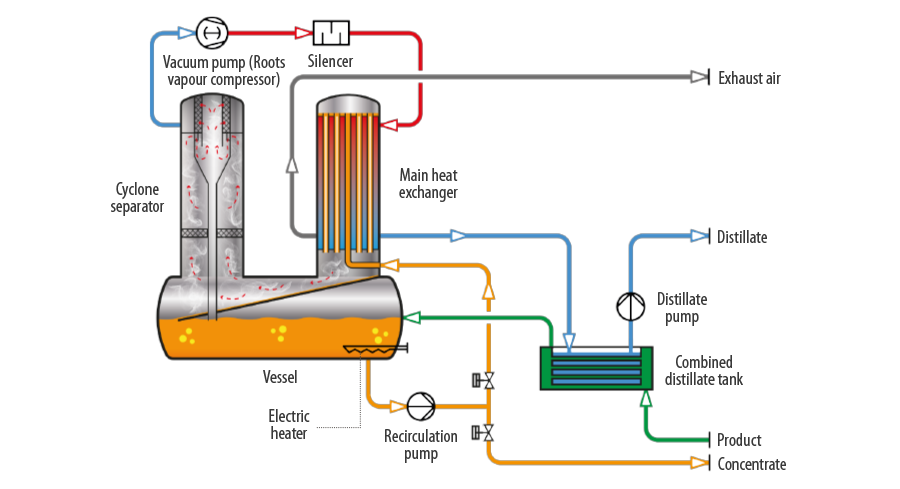
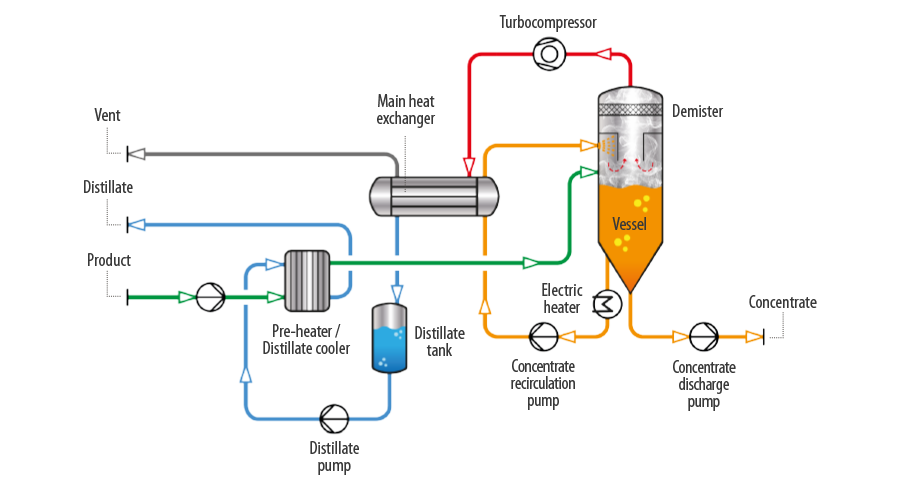
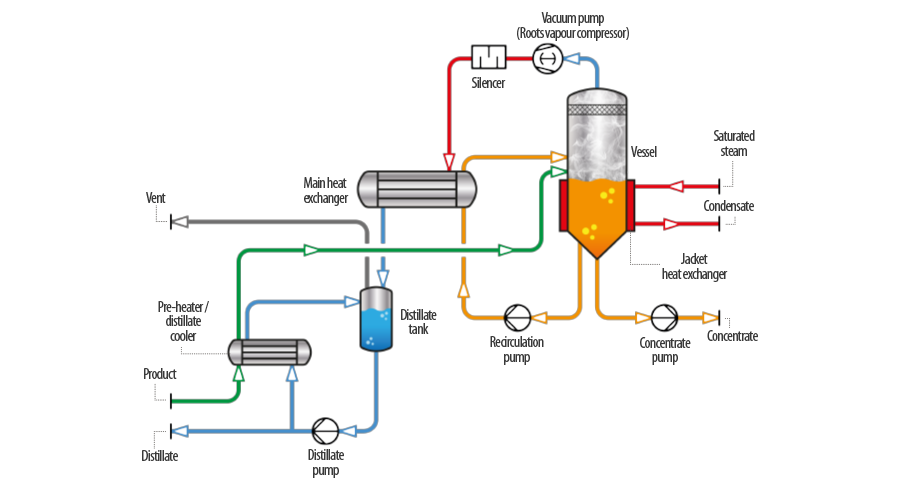
The following video shows the DESALT MVR FC evaporator/crystallizer. The video highlights all the main components and benefits of mechanical vapor recompression systems.
OPERATION OF OUR MVR EVAPORATORS
Power supply and preheating
The wastewater or liquid stream enters the system and is preheated to reach the required evaporation conditions.
Before the main evaporation process begins, the flow rate, temperature, and vacuum conditions are stabilized.
Vacuum evaporation stage
The liquid enters the evaporator, where evaporation takes place under vacuum conditions.
Two streams are generated: water vapor and concentrated sludge (which continues to increase its solids content).
Mechanical vapor compression
The generated vapor is directed to a compressor, where its pressure increases and its temperature rises.
Subsequently, the recompressed vapor is reused as the heating source for the evaporator itself.
Condensation and final concentration
The vapor releases its heat and condenses, producing reusable distilled water.
The concentrate reaches a high solids content and, in systems such as DESALT MVR FC, controlled crystallization of the salts takes place.
Final products: recovered water and concentrate or solid crystals.
3D VIDEO ANIMATION
The following 3D animation shows in great detail how our mechanical vapor recompression evaporators work, from feeding the solution to be treated into the evaporator to extracting the distillate and concentrate from the system.
CONFIGURATIONS OF OUR MECHANICAL VAPOR RECOMPRESSION EVAPORATORS
MVR evaporators can be designed in different configurations to adapt to the properties of the effluent to be treated and the operating conditions of each process.
We offer different models of MVR evaporators, including forced-circulation, natural-circulation, and falling-film evaporators. This allows us to select the configuration that best suits the characteristics of the effluent to be treated, taking into account factors such as scaling tendency, solids content, viscosity, and thermal behavior, ensuring maximum efficiency and reliability in every application.