


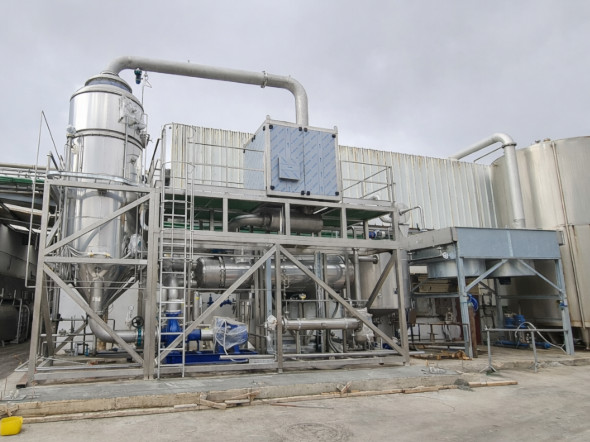
- Thermal and electrical crystallizers
- Up to 99% of water recovered
- Up to 90% of waste reduction
OUR RANGE OF WASTEWATER CRYSTALLIZERS
At Condorchem Enviro Solutions, we design and manufacture wastewater crystallizers for zero liquid discharge (ZLD) systems. Our crystallizers deliver outstanding performance in the treatment of industrial effluents by providing:
- Maximum reduction of the final waste requiring disposal, minimizing transport and disposal costs.
- Maximum recovery of high-quality water suitable for reuse.
- Recovery of salts and other valuable resources present in industrial effluents.
- Less storage space is needed on site and smaller volumes must be transported to waste management facilities, reducing collection frequency and transportation costs.
- Full assurance of compliance with industrial wastewater discharge regulations.
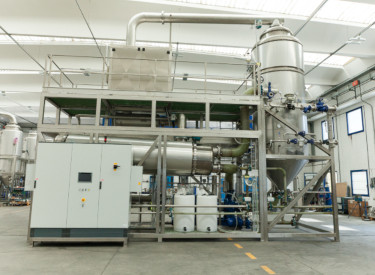
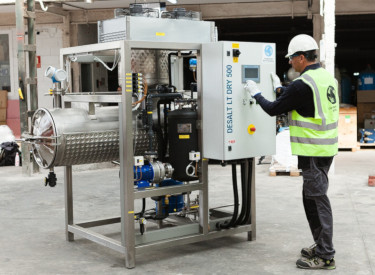
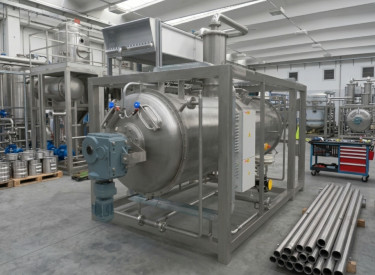
CUSTOMIZED DESIGN
Each crystallizer is engineered to match the specific characteristics of the wastewater stream, ensuring maximum process efficiency while meeting the environmental and financial objectives established by the customer.
CAPACITY RATES
Our vacuum crystallizers can manage a wide variety of flow rates that go from 100 liters per day up to 60000 liters per day.
EFFLUENT COMPOSITION
Effective in the minimization of effluents with extreme high salinity levels and other non-volatile organic contaminants.
AVAILABLE ENERGY
Our vacuum crystallizerss can operate with electrical or thermal energy to optimize operational costs and process efficiency.
CONSTRUCTION MATERIALS
Available in stainles steel 304 or 316 and corrosive resistant materials, such as super duplex, titanium, or sanicro 28
OUR WASTEWATER CRYSTALLIZERS: MODELS & TECHNICAL SPECS
ELECTRICAL HEAT PUMP CRYSTALLIZERS
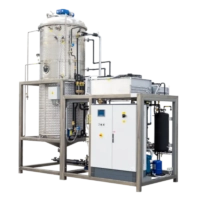
Technology: Heat pump (Freon R-513A)
Capacity (l/day): 250 to 3500
Electricity consumption per 1 m³ of distillate produced: 220 kWh/m³
Vacuum: ≈ 60 mbar
Evaporation temperature: ≈ 35 °C
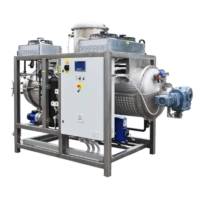
Technology: Heat pump (Freon R-513A)
Capacity (l/day): 250 to 1000
Electricity consumption per 1 m³ of distillate produced: 270 kWh/m³
Vacuum: ≈ 60 mbar
Evaporation temperature: ≈ 35 °C
ELECTRICAL MECHANICAL VAPOR RECOMPRESSION (MVR) CRYSTALLIZERS
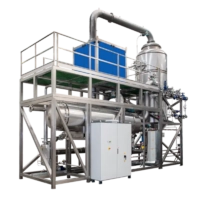
Technology: Mechanical Vapor Recompression (MVR) / Forced Circulation (FC)
Capacity (l/h): 600 to 2500
Electricity consumption per 1 m³ of distillate produced: 64 kWh/m³
Vacuum: ≈ 700 mbar
Evaporation temperature: ≈ 90 °C
THERMAL CRYSTALLIZERS
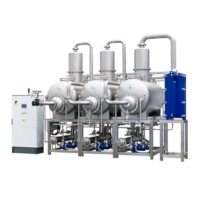
Technology: Evaporation with thermal energy
Capacity (l/day): 2000 to 20000
Electricity consumption per 1 m³ of distillate produced: 4,2 to 5 kWh/m³
Thermal energy for evaporation: Saturated steam or hot water
Thermal energy for condensation: Cooling water
Vacío: ≈ 200 mbar
Evaporation temperature: ≈ 60 °C
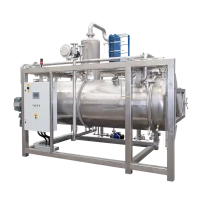
Technology: Evaporation with thermal energy
Capacity (l/day): 500 to 3000
Electricity consumption per 1 m³ of distillate produced: 2,7 to 7,4 kWh/m³
Thermal energy for evaporation: Saturated steam or hot water
Thermal energy for condensation: Cooling water
Vacuum: ≈ 200 mbar
Evaporation temperature: ≈ 60 °C
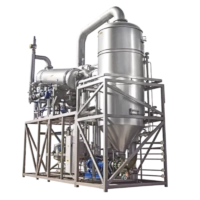
Technology: Evaporation with thermal energy
Capacity (l/day): 20000 to 100000
Electricity consumption per 1 m³ of distillate produced: 26 to 48 kWh/m³
Thermal energy for evaporation: Saturated steam or hot water
Thermal energy for condensation: Cooling water
Vacuum: ≈ 200 mbar
Evaporation temperature: ≈ 60 °C
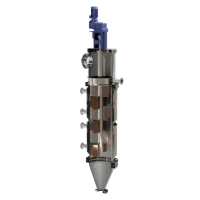
Technology: Evaporation with thermal energy
Capacity (kg/day): 10000
Electricity consumption per 1 m³ of distillate produced: 5,5 kWh/m³
Thermal energy for evaporation: Saturated steam
Thermal energy for condensation: Cooling water
Vacuum: N/A
Evaporation temperature: ≈ 100 °C (Patm)
KEY TECHNOLOGY IN ZERO LIQUID DISCHARGE SYSTEMS
Vacuum crystallizers play a vital role in Zero Liquid Discharge (ZLD) systems by treating the concentrated brines that remain after upstream water recovery processes. These streams contain high levels of dissolved salts and other contaminants that conventional treatment technologies often struggle to manage.
By recovering additional water and converting dissolved salts into solid crystals, vacuum crystallizers help eliminate the final liquid waste stream. Combined with appropriate solid–liquid separation and management of any remaining mother liquor, they enable facilities to achieve true ZLD.
This makes them particularly valuable where wastewater discharge is not permitted, water reuse is a priority, or external waste management costs are high. By minimizing residual waste volumes, they also reduce on-site storage requirements and the quantities transported to waste management facilities.
Beyond wastewater treatment, crystallization can support the recovery of valuable salts and raw materials. Under suitable operating conditions, it can produce high-purity crystals, enabling resource recovery and industrial product purification.