- The widest capacity range
- Available thermal and electrical energy options
- One, two, and three effects available
AVAILABLE MODELS AND MAIN TECHNICAL FEATURES
We design, manufacture and install forced-circulation vacuum evaporators to meet different flow rate, energy efficiency and effluent characteristics requirements. Our range includes everything from compact equipment to high-capacity solutions for treating large volumes of industrial wastewater.
Forced circulation keeps the effluent continuously moving through the heat exchanger, reducing scale formation and ensuring high reliability even in the most demanding applications.
In addition, these units can incorporate MVR, heat pump or multiple-effect technologies to optimise energy consumption according to the requirements of each project.
This technology is particularly recommended for treating effluents with a high tendency to fouling, high viscosity, crystals, suspended solids or salts that hinder natural circulation.
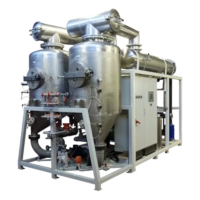
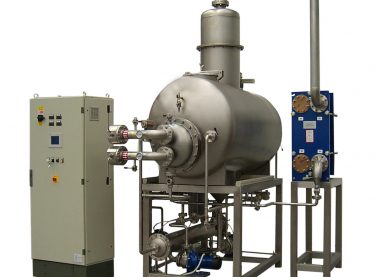
Technology: Heat Pump (Freon R-513A) / Forced Circulation (FC)
Capacity (l/day): 6720 to 52800
Electricity consumption per 1 m³ of distillate produced: 110 kWh/m³
Vacuum: ≈ 120/70 mbar
Evaporation temperature: ≈ 50/40 °C
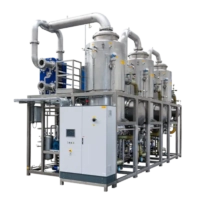
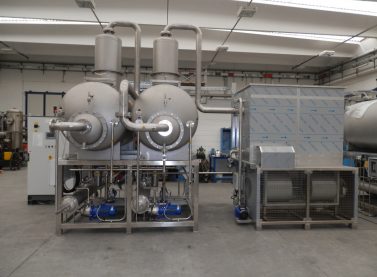
Technology: Forced Circulation (FC) thermal energy evaporation
Capacity (l/day): 20000 to 200000
Electricity consumption per 1 m³ of distillate produced: 20 to 110 kWh/m³
Thermal energy for evaporation: 630 to 2100 kWht
Thermal energy for condensation: 630 to 2100 kWht
Vacuum (1st/2nd/3rd Effect): ≈ 310/200/125 mbar
Evaporation temperature (1st/2nd/3rd Effect): ≈ 70/60/50°C
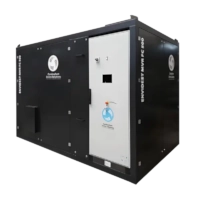
Technology: Mechanical Vapor Recompression (MVR) / Forced Circulation (FC)
Capacity (l/h): 1042 to 4166
Electricity consumption per 1 m³ of distillate produced: 35 kWh/m³
Vacuum: ≈ 750 mbar
Evaporation temperature: ≈ 90-94 °C
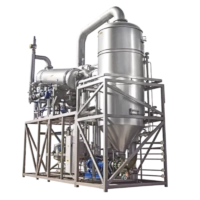
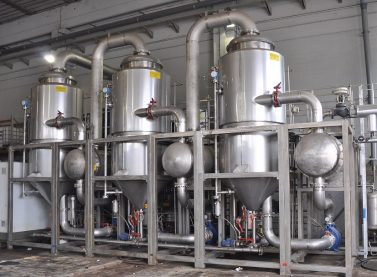
Technology: Thermal energy evaporation / Forced Circulation (FC)
Capacity (l/day): 20000 to 100000
Electricity consumption per 1 m³ of distillate produced: 26 to 48 kWh/m³
Thermal energy for evaporation: 630 to 3140 kWht
Thermal energy for condensation: 630 to 3140 kWht
Vacuum (1st/2nd/3rd Effect): ≈ 200 mbar
Evaporation temperature (1st/2nd/3rd Effect): ≈ 60°C
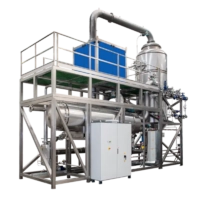
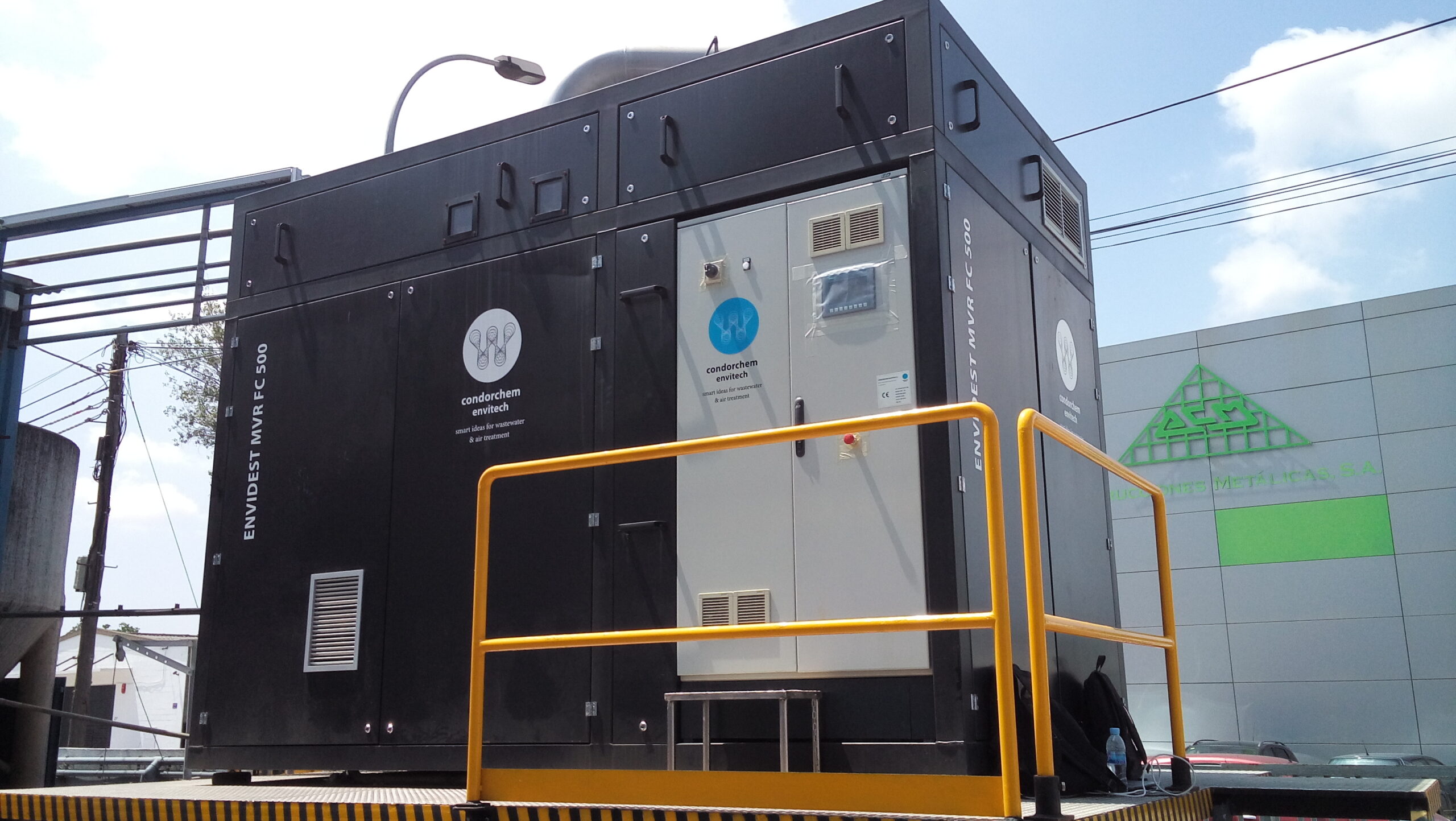
Technology: Mechanical Vapor Recompression (MVR) / Forced Circulation (FC)
Capacity (l/h): 600 to 2500
Power consumption per 1 m³ of distillate produced: 64 kWh/m³
Vacuum: ≈ 700 mbar
Evaporation temperature: ≈ 90 °C
KEY ADVANTAGES
All our forced-circulation evaporation systems offer:
- Minimization of the volume of waste to be managed
- Significant reduction in waste management costs
- Treatment of complex effluents
- Possibility of implementing a zero-discharge system
- Compliance with current regulations on effluent discharge
MAIN COMPONENTS
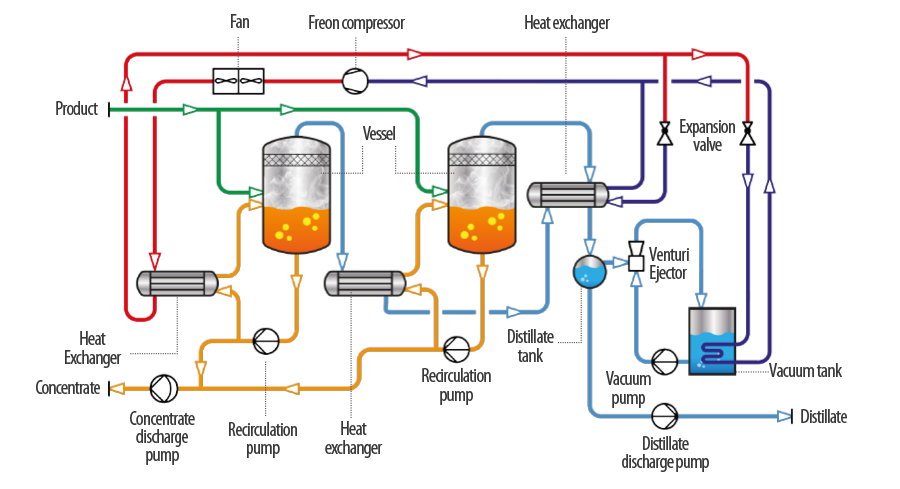
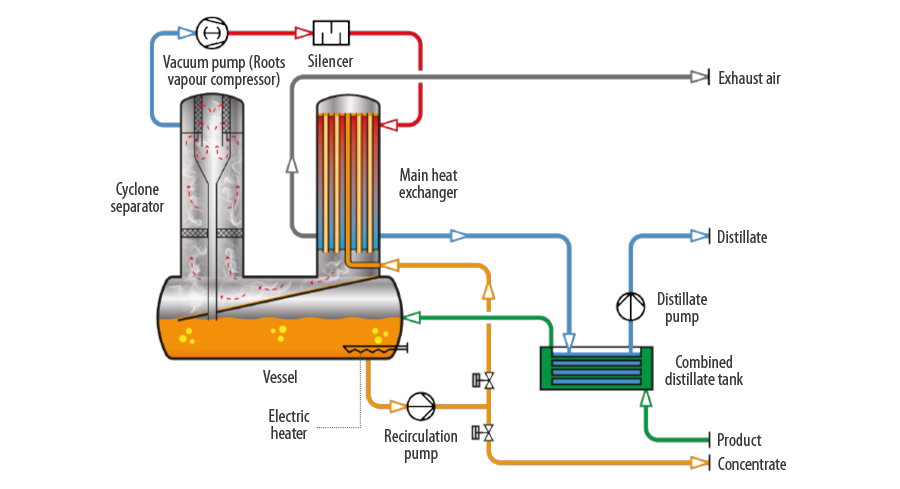
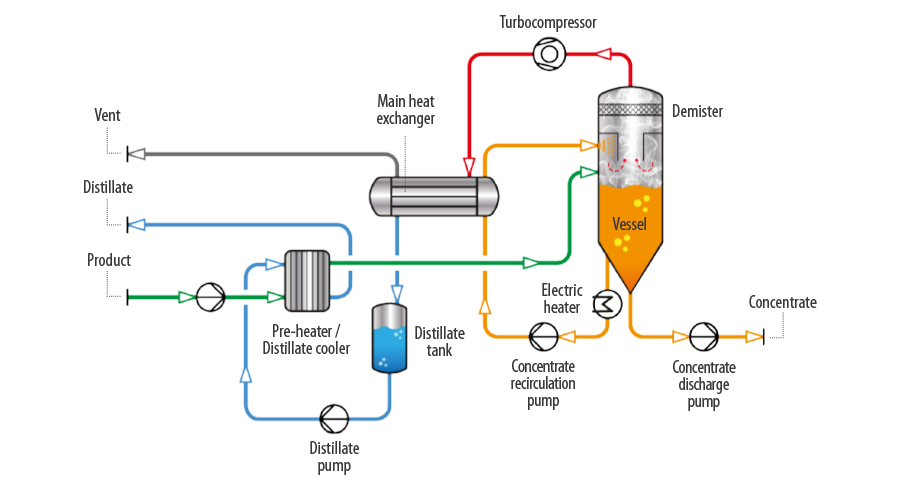
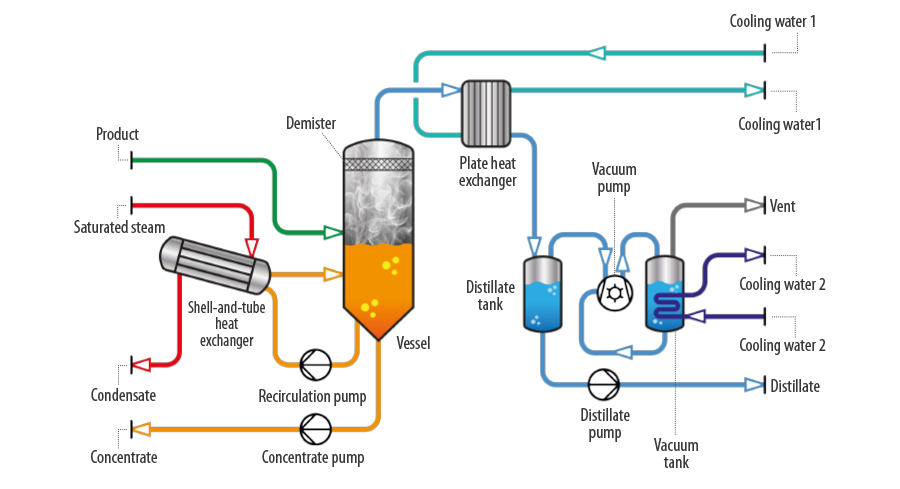
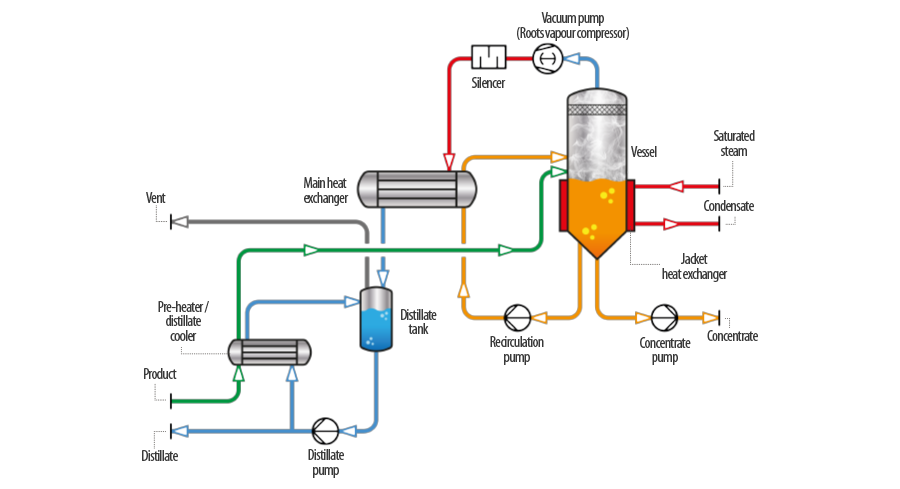
The following video shows how forced circulation works within the operating cycle of the ENVIDEST MVR FC:
OPERATION OF OUR FORCED-CIRCULATION VACUUM EVAPORATORS
Start-up and filling
When the evaporator is switched on, the feed valve opens and the product begins to fill the vessel chamber.
Forced circulation
Once the level is reached, the recirculation pump is activated to create a constant flow of liquid through the heat exchanger and its corresponding vessel, ensuring effective heat transfer and the handling of complex streams that would otherwise quickly foul or choke the process.
Circuit Heating
For thermal evaporators, either saturated steam or hot water is circulated through the jackets to reach the operating temperature.
Electric evaporators use a series of electric heating elements inside the vessel to achieve the same result.
Circulation and condensation
Once the entire circuit has reached operating temperature, the vapors from the vessel are directed through heat exchangers and condensed to recover the distillate. Heat is recovered during the process, heating the new product introduced to refill the vessel.
3D VIDEO ANIMATION
The following is a 3D video animation that shows step by step how our multiple-effect evaporators work.
CONFIGURATIONS
Our forced-circulation evaporators can be manufactured in different configurations:
- Energy: electrical or thermal
- Single-, double- or triple-effect evaporators.
In this way, each evaporator can be adapted to the flow rate to be treated, the availability of energy, the operating cost and the investment budget of each project.
Thermal evaporators are the most suitable option for large treatment capacities, especially when a residual heat source is available. Single-effect systems are the most cost-effective alternative for low flow rates or when the aim is to minimize the initial investment.
In contrast, double- and triple-effect configurations reuse the latent heat generated during evaporation, significantly reducing the energy consumption and operating cost of the process.
Electric evaporators, for their part, stand out for their flexibility, ease of installation and high efficiency when treating a wide range of flow rates, especially when space is limited.