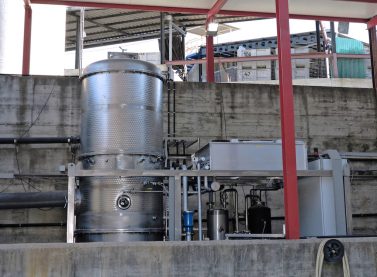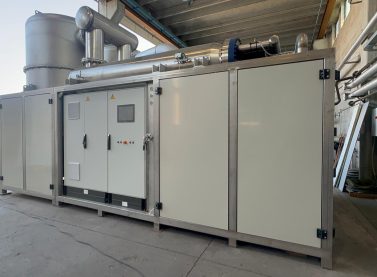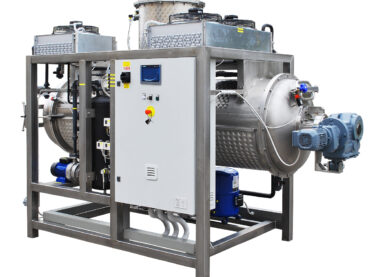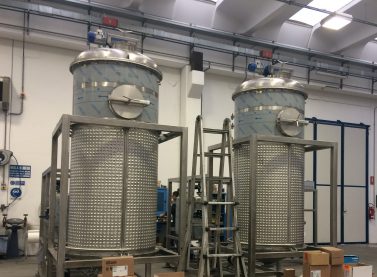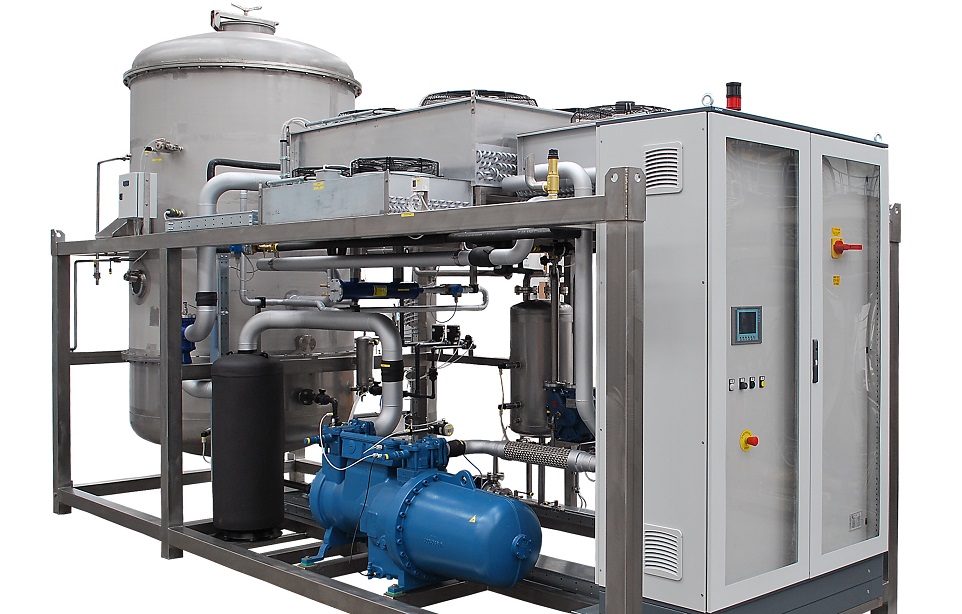
- Fully electrical operated evaporators
- Lowest evaporation temperature
- Ideal for recovery of raw materials and by-products
AVAILABLE MODELS AND MAIN TECHNICAL CHARACTERISTICS
We supply a wide range of customized heat pump evaporators and crystallizers. Thanks to its low vacuum temperature, heat pump evaporators are the perfect option for the evaporation of heat-sensitive and/or corrosive products, reducing the risk of thermal degradation of the product and the deterioration of construction materials.
We manufacture four different models.
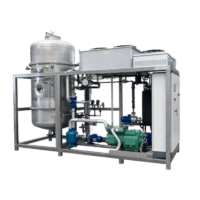
Technology: Heat Pump (Freon R-513A)
Capacity (l/day): 250 to 18000
Electricity consumption per 1 m³ of distillate produced: 170 kWh/m³
Vacuum: ≈ 60 mbar
Evaporation temperature: ≈ 35°C
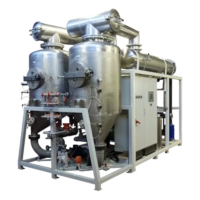
Technology: Heat Pump (Freon R-513A) / Forced Circulation (FC)
Capacity (l/day): 6720 to 52800
Electricity consumption per 1 m³ of distillate produced: 110 kWh/m³
Vacuum (1st/2nd Effect): ≈ 125/70 mbar
Evaporation temperature (1st/2nd Effect): ≈ 50/40 °C
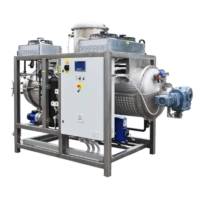
Technology: Heat Pump (Freon R-513A)
Capacity (l/day): 250 to 1000
Electricity consumption per 1 m³ of distillate produced: 270 kWh/m³
Vacuum: ≈ 60 mbar
Evaporation temperature: ≈ 35°C
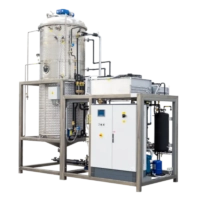
Technology: Heat Pump (Freon R-513A)
Capacity (l/day): 250 to 3500
Electricity consumption per 1 m³ of distillate produced: 220 kWh/m³
Vacuum: ≈ 60 mbar
Evaporation temperature: ≈ 35°C
KEY ADVANTAGES
All our heat pump evaporation systems deliver exceptional operational advantages:
- Operates under vacuum at very low temperatures. This helps reduce scaling and fouling, which lowers corrosion risks.
- High energy efficiency (low kWh per m³ treated). They reuse the latent heat of condensation to evaporate new liquid. They primarily consume electricity to drive the compressor.
- Operate entirely on electricity. No need for boilers, steam lines, or thermal oil circuits. Simplified plant infrastructure, lower maintenance of auxiliary equipment, easier integration into existing facilities.
MAIN COMPONENTS
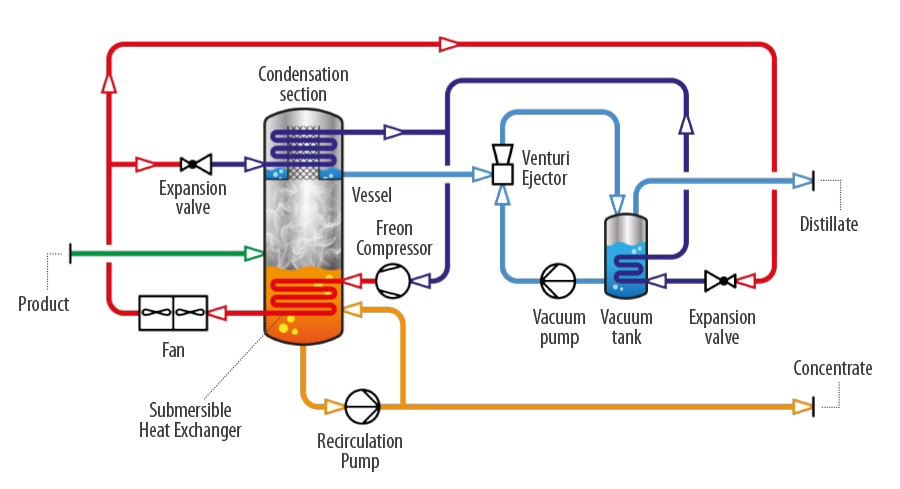
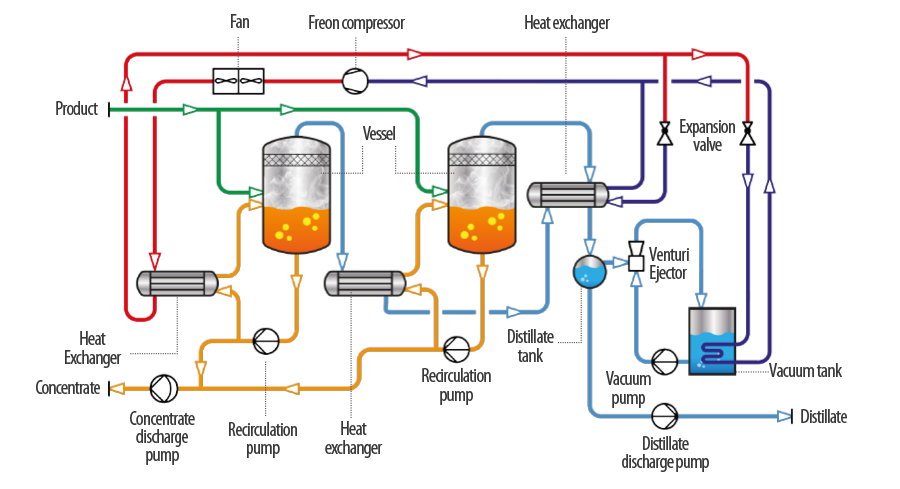
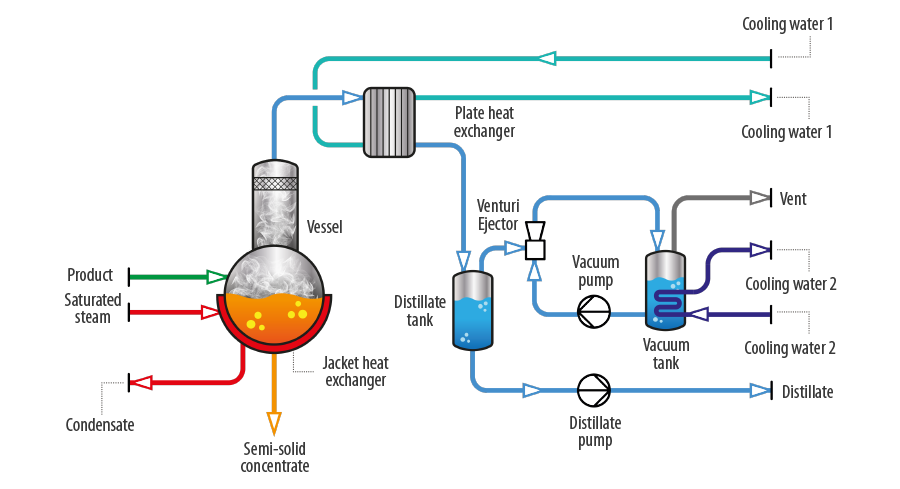
The following video showcases an Envidest LT VS evaporator. The video highlights all the main components and the benefits of low temperature, heat pump evaporation systems.
OPERATION OF OUR HEAT PUMP EVAPORATORS
Vacuum generation and low temperature boiling
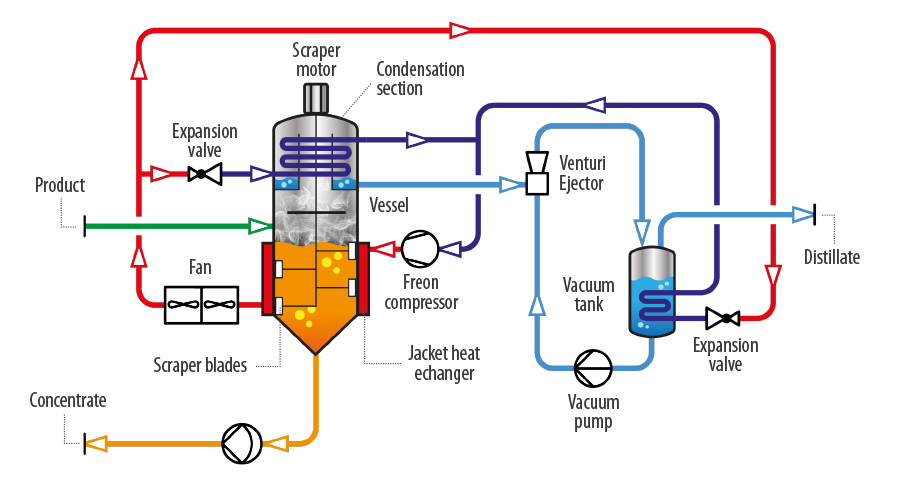
The process begins by creating vacuum conditions inside the evaporation chamber. By reducing pressure, the boiling point of the effluent drops to approximately 35–45°C. Water vapor is generated without thermal degradation of sensitive compounds.
Heat pump heating cycle
The heat required for evaporation is supplied by a closed-loop refrigeration cycle. The refrigerant gas is compressed, increasing its pressure and temperature. Then it passes through a heat exchanger transferring heat and sustaining evaporation. Next, the refrigerant is expanded through an expansion valve, reducing its temperature and pressure.
Vapor generation and continuous feeding
As heat is transferred to the effluent, the liquid begins to boil under vacuum and water vapor is continuously generated. Fresh effluent is preheated and fed into the evaporator to maintain steady operation.
Vapor condensation and energy recovery
The vapor produced during evaporation is directed to a second heat exchanger. The refrigerant absorbs heat from the vapor, which condenses into distilled water. The recovered distillate is extracted from the system and the refrigerant, now warmed, returns to the compressor to restart the cycle.
HEAT PUMP CONFIGURATIONS
Heat pump evaporators can be designed in different configurations to match the properties of the feed stream and the operating conditions of each process.
At Condorchem Enviro Solutions, we manufacture four types of electrically driven heat pump evaporators, each designed to achieve different levels of concentration and dryness, including corrosive and aggressive streams, while offering a wide range of solutions for varying wastewater volumes and compositions.